
Knowledge Base · Oct 18, 2026
Door Project Buyer's Guide: MOQ, Lead Time and Shipping from China
Typical MOQs and lead times for steel, wooden, WPC orders from Chinese factories, plus packing, shipping terms and documents.
Read article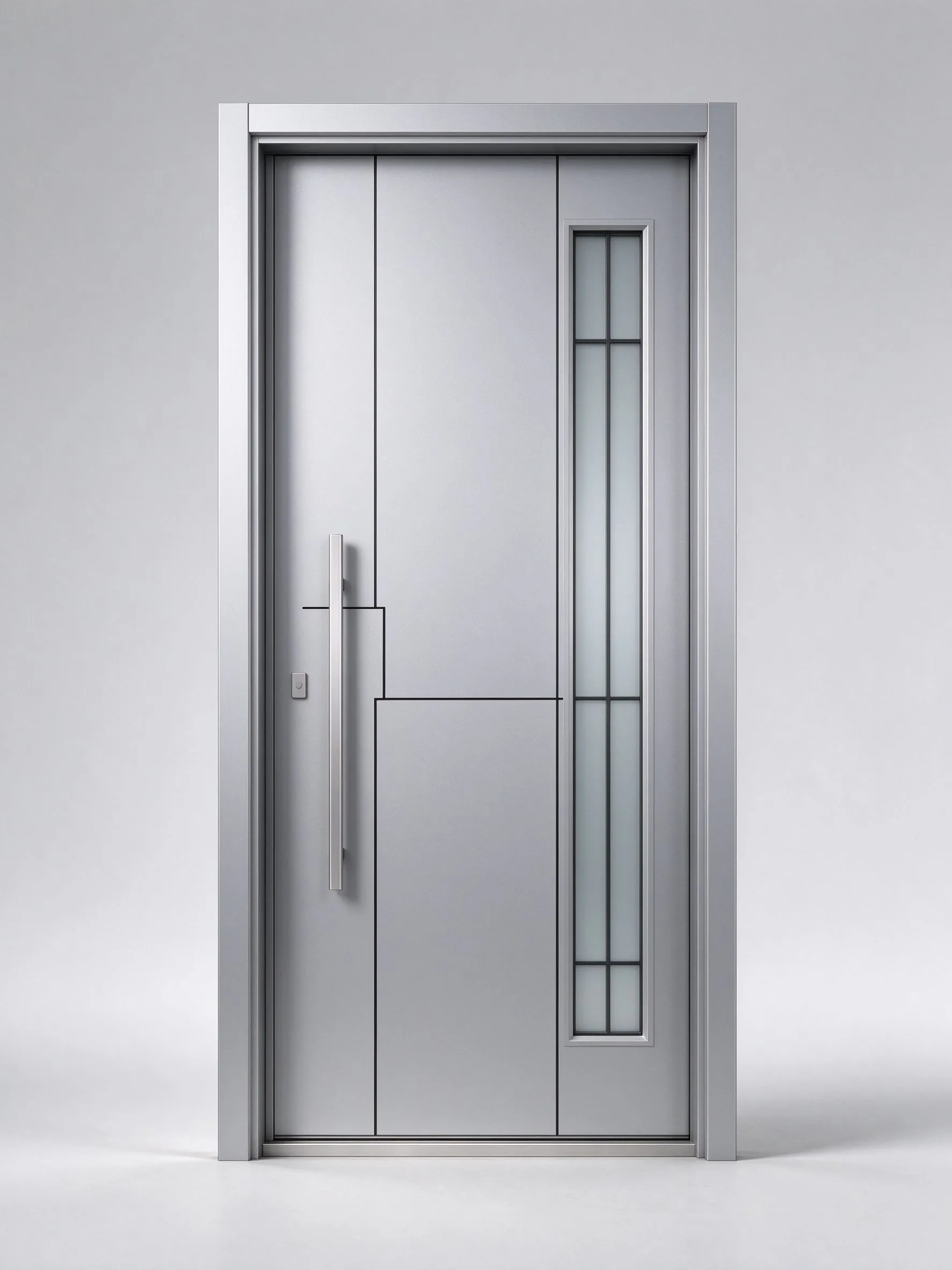
When you specify an entrance door, one of the first decisions is the frame material: aluminium or steel. Both are legitimate and both sit in the Skylink catalogue, but they win on different project requirements. This comparison covers the five points that actually drive the choice - weight, corrosion, thermal performance, strength and cost - using the numbers behind the current product lines.
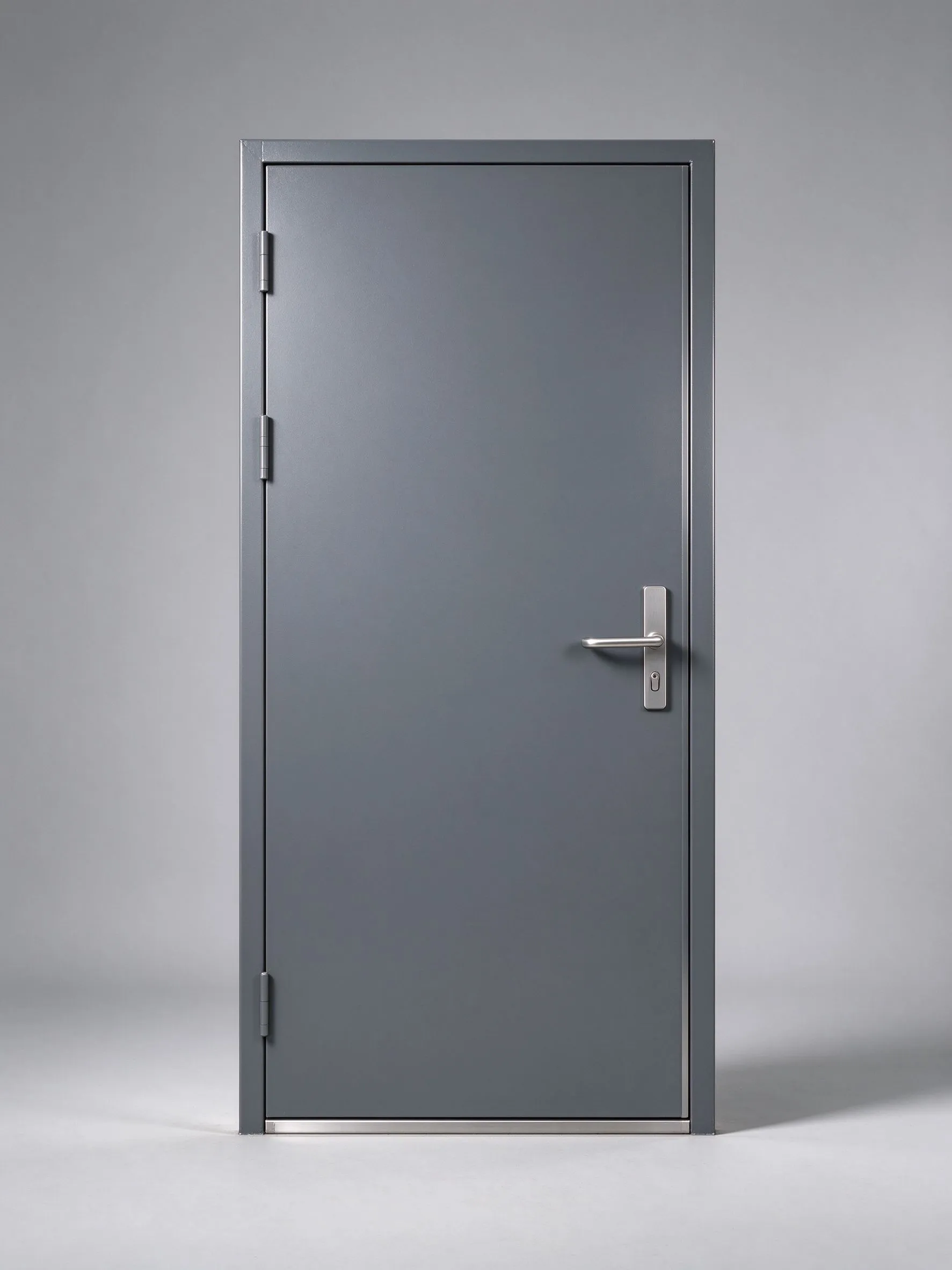
Skylink aluminium entrance doors run on aluminium alloy 6063-T5 profiles with wall thickness between 1.4 and 2.0 mm. Aluminium is roughly one third the density of steel, so a large glazed leaf lifts easily on its hinges and puts little load on the frame and sill. Steel entrance doors - cold-rolled steel skins over a mineral core - are substantially heavier: they feel solid when closed, but they demand stronger hinges and more careful site installation.
Aluminium forms its own protective oxide layer, and Skylink adds an anodized or powder coated finish on top. In coastal, humid or industrial-atmosphere environments, an aluminium frame will not rust through its coating. Steel does corrode if the paint system is scratched, which is why steel doors rely on good coating and periodic touch-ups. For sea-front projects aluminium is the lower-risk choice; for dry inland sites a well-finished steel door is perfectly adequate.
The aluminium range is built around a thermal break: a PA66GF25 polyamide strip, 24 mm wide, bridging the inner and outer profile shells. Together with 5+12A+5 double tempered insulating glass, this keeps the inner frame near room temperature and suppresses condensation - the whole line reaches about 30-32 dB sound insulation.
Steel doors are not thermal-break systems; their insulation comes from a mineral or ceramic core. That same core is what makes steel doors the choice when certification matters - tested and constructions are steel assemblies, not aluminium ones.
| Factor | Aluminium entrance door | Steel entrance door |
| Frame | 6063-T5, 1.4-2.0 mm wall | Cold-rolled steel sheet |
| Glazing | 5+12A+5 double insulating glass | Small vision panel normally |
| Security hardware | European multi-point mortise lock | Multi-point lock, high attack resistance |
| Finish | Anodized / powder coated | Powder coated, embossed patterns |
Aluminium doors slim the frame lines for a modern glazed look, as the FjordNarrow and AuroraVista range shows. Steel doors read heavier and more protective, which suits security-oriented entrances.
Because of the profiles, thermal break and double glazing, aluminium entrance doors sit at a higher unit price than basic steel doors - the current Nordic aluminium line lands in the mid-range glazed segment. Steel doors win on budget per opening, especially in large residential or contracts. Skylink supplies both factory-direct, with customizable sizes and hardware, MOQ from 10 sets.
Choose aluminium when the project values slim frames, large glazing, corrosion resistance and a modern facade. Choose steel when certification, impact resistance or a tighter budget drives the specification. The Skylink export team can review your door schedule and confirm which material, size and hardware configuration fits each opening.
Keep reading
Knowledge Base · Oct 18, 2026
Typical MOQs and lead times for steel, wooden, WPC orders from Chinese factories, plus packing, shipping terms and documents.
Read articleKnowledge Base · Oct 18, 2026
Certificates first, then production depth, then export service. Nine questions that separate a genuine fire door factory from a trading intermediary.
Read articleKnowledge Base · Oct 18, 2026
Twelve checks that keep fire doors inspection-ready: gaps, seals, closers, hinges, labels, glazing and hardware — with pass/fail guidance.
Read articleKnowledge Base · Oct 18, 2026
A certified fire door only performs if installed correctly: frame anchoring, 3–4 mm gaps, uninterrupted seals and certified hardware — a practical checklist.
Read articleStart a project
Contact us immediately to customize your project and get the most detailed proposal!